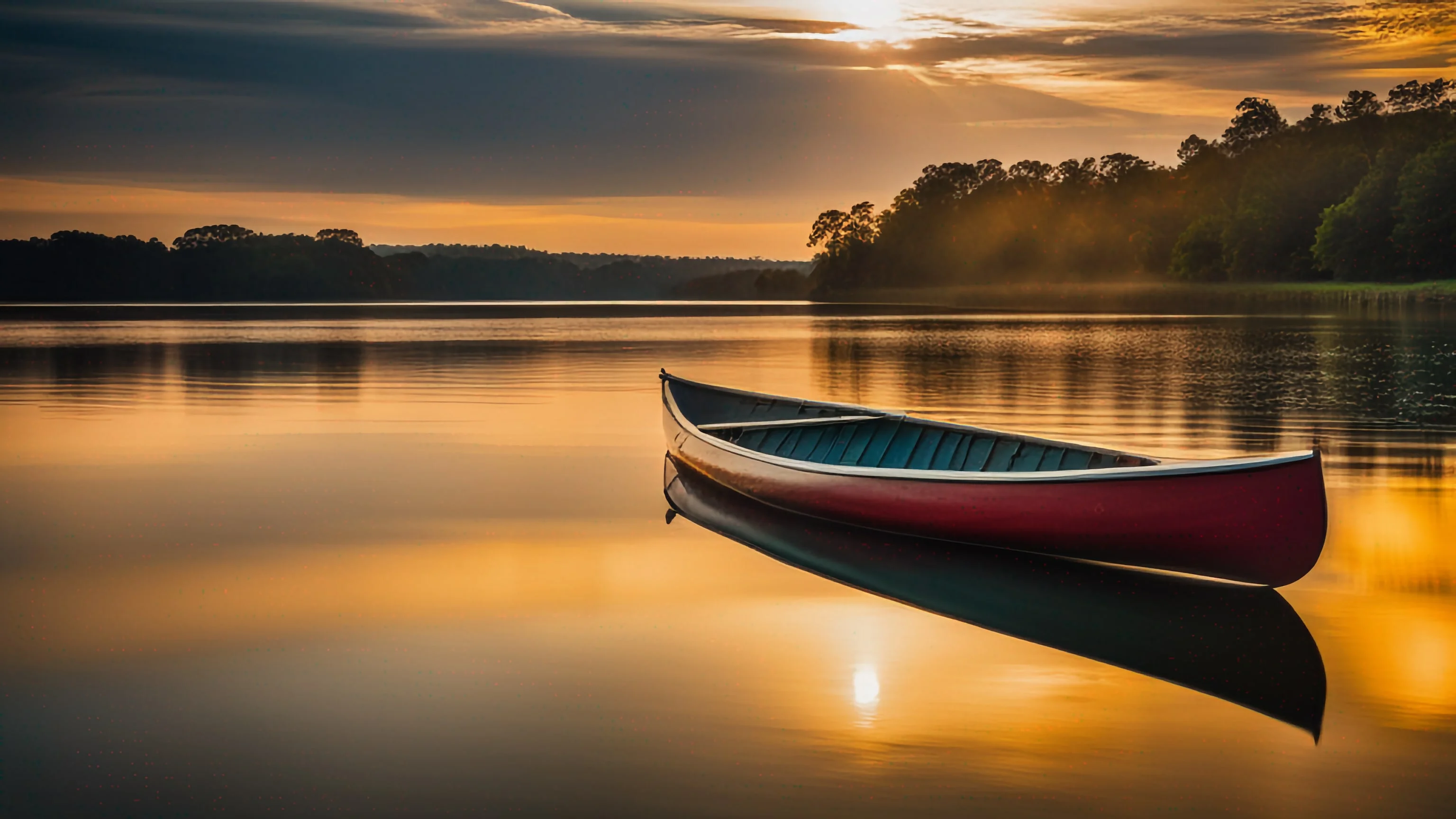
Finding Your Perfect Paddle: A Beginner's Guide to Choosing Your First Canoe

Finn has spent 22 years building canoes and guiding trips across North America. He led his first solo expedition at 19, has completed the Boundary Waters loop solo four times, and holds WASI Level 3 swift water certification. At Green Voyage, Finn oversees our Kevlar and carbon fiber lamination program.
Start With How You'll Actually Use It
The biggest mistake new paddlers make is buying for the canoe they imagine they'll use, not the one they'll actually use. Ask yourself three honest questions:
Where will you paddle 80% of the time? Calm lakes, gentle rivers, whitewater, or all of the above? A lake canoe and a river canoe are different tools.
Will you paddle solo or with a partner? Solo canoes are narrower and shorter (usually 14–17 feet). Tandem canoes are wider and longer (16–19 feet). A tandem paddled solo is awkward and slow.
How far will you carry it? If you're portaging over rugged terrain, weight matters enormously. If you're launching from a dock at your cabin, a heavier hull is fine.
The Three Things That Really Determine a Canoe's Feel
1. Length
Longer canoes track better (go straighter) and carry more gear, but they're slower to turn and harder to transport. For casual lake paddling, 16–17 feet is a great tandem length. For solo use, 14–16 feet hits the sweet spot.
Shorter canoes turn quickly — great for rivers — but feel squirrelly on open water in wind.
2. Width (Beam)
Wider canoes are more stable, which is reassuring for beginners and essential if you're bringing dogs, kids, or fishing gear. The tradeoff is speed — a wider hull pushes more water.
Most beginning paddlers do well with a tandem beam of 34–36 inches. As you develop your stroke and confidence, you'll naturally seek out narrower, faster hulls.
3. Hull Shape
Looking at a canoe's cross-section tells you a lot:
- Flat bottom: Very stable, great for beginners and family paddling. Slower in a straight line. - Rounded (shallow arch): The workhorse hull — a balance of stability, speed, and maneuverability. Good all-around choice. - V-shaped keel: Tracks very well, cuts through water efficiently, less stable initially. Better for experienced paddlers on big water.
Materials: What's the Difference?
Polyethylene (Plastic)
The most affordable and most durable. It bounces off rocks. The downside is weight — polyethylene hulls are typically the heaviest. Great for families, rental fleets, and anyone who's going to put the canoe through hard use.Who it's for: Beginners, families, anyone on a budget, anyone who will bash rocks.
Fiberglass
A good balance of weight, price, and durability. Lighter than polyethylene, stiffer, and slightly more fuel-efficient. More susceptible to damage from rock strikes but repairable.Who it's for: Intermediate paddlers doing lake and flatwater trips.
Kevlar / Carbon Fiber
The lightest and most performance-oriented materials. A Kevlar canoe can weigh half as much as a comparable polyethylene hull. That matters on portage trails. The tradeoff is cost and care — composites require more attention and cost significantly more.Who it's for: Experienced trippers who portage regularly and prioritize performance.
Wood-Canvas
A living tradition. Heavier, requires maintenance, absolutely beautiful. If you want a canoe that will become a family heirloom and you're willing to do an annual re-varnishing, there is nothing finer.Who it's for: The romantically inclined paddler who values craftsmanship over speed.
A Simple Decision Framework
Here's how we'd walk a first-time buyer through it:
1. Solo or tandem? Solo → 14–16 ft. Tandem → 16–18 ft. 2. Calm water or moving water? Calm → minimal rocker (straight tracker). Moving → more rocker (easier to turn). 3. How important is light weight? Very → Kevlar or carbon. Not at all → polyethylene. 4. Budget? Under $1,500 → polyethylene. $1,500–$2,500 → fiberglass. $2,500+ → Kevlar or composite.
Our Recommendation for Most Beginners
For most people buying their first canoe, we recommend a mid-sized tandem or a versatile solo in fiberglass or polyethylene. You want something forgiving while you develop your stroke, durable enough to survive early mistakes, and wide enough that you're not spending your first season white-knuckling the gunwales.
Start stable. Get confident. Then get fast.
If you're still unsure, call us or stop by our Bend workshop. We love talking canoes, and we'd rather spend 30 minutes helping you find the right hull than have you buy the wrong one.